Wednesday, November 20, 2024

Did You Know? 5 Surprising Industries Using IoT to Innovate


 The Internet of Things (IoT) is not just revolutionizing homes and businesses; it’s finding its way into some unexpected industries, transforming how they operate. From improving efficiency to enhancing customer experiences, IoT is unlocking incredible opportunities.

Here are five surprising industries embracing IoT to innovate:

Agriculture

IoT in agriculture? Absolutely! Farmers are now using smart sensors to monitor soil conditions, weather patterns, and crop health. With devices like automated irrigation systems, IoT helps maximize yields while reducing resource waste.

Sports

From fitness trackers to smart stadiums, IoT is reshaping the sports world. Wearable devices track player performance, while stadiums use IoT to manage energy, improve crowd safety, and offer personalized fan experiences.

Retail

IoT is revolutionizing retail with smart shelves, inventory management systems, and personalized shopping experiences. Retailers can track product demand in real-time and optimize stock levels, ensuring customers always find what they need.

Healthcare

While not entirely surprising, the depth of IoT’s impact in healthcare is remarkable. IoT devices like wearable health trackers, connected inhalers, and remote patient monitoring systems are improving patient care and outcomes significantly.

Hospitality

Hotels are becoming smarter with IoT. Guests can control room temperature, lighting, and entertainment through mobile apps. IoT also helps hotels optimize energy usage, enhance security, and deliver a seamless guest experience.

Why This Matters

IoT is driving innovation in unexpected places, improving efficiency, sustainability, and user experiences across diverse sectors. Whether it’s a farmer boosting crop yields or a sports team optimizing player performance, IoT is paving the way for smarter operations everywhere.

πŸ’¬ Which IoT application surprised you the most? Share your thoughts in the comments!

Tuesday, November 19, 2024

IoT for Parents: Gadgets That Can Make Parenting Easier


Parenting is a rewarding journey, but let’s be honest—it can be challenging too! Luckily, technology has come to the rescue, and the Internet of Things (IoT) is at the forefront of revolutionizing the way parents manage their daily responsibilities. From smart baby monitors to automated feeding systems, IoT gadgets are making parenting easier, safer, and more efficient.

Here’s how IoT is transforming parenting with must-have gadgets:

Smart Baby Monitors: Keeping an Eye on Your Little One

Gone are the days of constantly checking on your baby in their crib. Smart baby monitors, like the Owlet Smart Sock or Nanit Pro, provide real-time updates on your baby’s sleep, heart rate, and oxygen levels. Many devices even allow you to watch your child remotely via your smartphone, ensuring peace of mind at all times.

IoT-Enabled Thermometers

Parents no longer have to struggle with traditional thermometers. Devices like the Kinsa Smart Thermometer can monitor your child’s temperature and sync data to an app. This helps track their health over time and even provides recommendations for care.

Smart Feeding Systems

For parents of infants, IoT-enabled feeding systems like the Baby Brezza Formula Pro automatically prepare perfectly mixed formula bottles at the ideal temperature. No more late-night guesswork or waiting while your baby cries for food!

GPS Trackers for Kids

Keeping track of active children can be a challenge, especially in crowded places. IoT-powered GPS trackers, like the Jiobit Smart Tag, allow parents to monitor their kids' location in real time, ensuring their safety and giving parents peace of mind.

Automated Sleep Trainers

Struggling to get your toddler to sleep? Gadgets like the Hatch Rest+ combine a nightlight, sound machine, and time-to-rise indicator to help establish healthy sleep routines. Parents can control the device via an app, creating the perfect bedtime environment.

Smart Home Safety Gadgets

IoT devices like smart locks, cameras, and motion sensors make your home safer for your children. For instance, you can use a smart lock to prevent curious toddlers from accessing dangerous areas or receive alerts if unusual activity is detected around the house.

Interactive IoT Toys

Educational and interactive IoT toys like Cozmo and Miko help children learn while having fun. These gadgets are great for encouraging problem-solving, creativity, and social interaction.

How IoT Benefits Parents

  • Convenience: Automates time-consuming tasks like feeding or sleep monitoring.
  • Peace of Mind: Provides real-time updates on your child’s health and safety.
  • Improved Safety: IoT devices help childproof your home and monitor your child’s activities.
  • Better Time Management: Saves time, allowing parents to focus on quality moments with their kids.

Final Thoughts

IoT gadgets are truly changing the game for parents, making everyday tasks easier and less stressful. While no technology can replace the love and care parents provide, these smart devices are excellent tools to support you on your parenting journey.

Have you tried any IoT parenting gadgets? Share your experiences in the comments below!

Saturday, November 16, 2024

How IoT is Transforming Everyday Life: From Smart Homes to Smart Cities


The Internet of Things (IoT) is revolutionizing the way we live, work, and interact with the world around us. From the cozy confines of our homes to the bustling streets of modern cities, IoT is creating smarter, more efficient environments. Here’s a look at how IoT is shaping everyday life:

Smart Homes: The Foundation of Modern Living 🏑

IoT has turned houses into smart homes, where connected devices enhance convenience and comfort:

  • Smart Thermostats: Automatically adjust temperatures for energy savings.
  • Smart Lighting: Control lights with your voice or smartphone.
  • Home Security: Cameras, motion detectors, and alarms that alert you in real-time.
  • Voice Assistants: Devices like Alexa and Google Home make daily tasks easier.

These innovations save time, reduce energy usage, and create a personalized living experience.

Wearable Tech: IoT for Health and Fitness

Wearables like smartwatches and fitness trackers monitor our health, track physical activity, and even detect early signs of health issues. These devices empower users to take control of their well-being with data-driven insights.

Smart Transportation: Easier and Safer Journeys πŸš—

IoT is reshaping transportation with connected vehicles and systems:

  • Real-time traffic updates and navigation.
  • Predictive maintenance to avoid breakdowns.
  • Self-driving cars that promise safer and more efficient roads.
  • Ride-sharing apps optimized by IoT for better user experiences.

Smart Cities: The Future of Urban Living πŸŒ†

IoT is at the core of building smart cities that improve the quality of life for residents:

  • Smart Traffic Systems: Reduce congestion with real-time monitoring and adaptive signals.
  • Efficient Energy Use: Smart grids manage power distribution and reduce waste.
  • Connected Public Services: IoT-enabled waste management, water monitoring, and public safety systems.
  • Air Quality Sensors: Monitor pollution and help cities stay environmentally friendly.

IoT in Retail: Shopping Reinvented πŸ›’

IoT is revolutionizing retail by improving customer experiences:

  • Smart shelves that track inventory in real-time.
  • Personalized shopping experiences through customer data analysis.
  • Contactless payments for faster checkouts.

The Road Ahead πŸš€

IoT’s integration into daily life is just beginning. As technology advances, we can expect even more seamless connections between devices, making our environments smarter, more efficient, and more sustainable.

From controlling your coffee maker with your phone to creating cities that adapt to their residents, IoT is the driving force behind a smarter, more connected world.

How has IoT transformed your life? Let us know in the comments!

Friday, November 15, 2024

What’s in Your Car? The Rise of IoT in Modern Vehicles πŸš—πŸŒ

Gone are the days when cars were just a means of getting from point A to point B. Today, vehicles are smarter, more connected, and more integrated than ever, thanks to the Internet of Things (IoT). But what’s actually in your car that makes it so intelligent? Let’s take a closer look at how IoT is driving the automotive revolution.

Smart Infotainment Systems πŸŽΆπŸ“±

Modern vehicles now come equipped with IoT-powered infotainment systems that offer navigation, music streaming, voice control, and even in-car internet access. Sync your smartphone, make hands-free calls, or stream your favorite playlists—it’s like having a mini entertainment hub on wheels.

Advanced Driver Assistance Systems (ADAS) πŸ›‘️🚦

IoT is at the heart of ADAS features like lane-keeping assist, adaptive cruise control, and automatic emergency braking. These systems use sensors, cameras, and data processing to make driving safer and easier, reducing accidents and enhancing road awareness.

Remote Vehicle Management πŸ“²πŸ”‘

With IoT-enabled apps, you can control your car remotely. Start the engine, adjust the climate control, or even locate your car in a crowded parking lot—all from your smartphone. It’s convenience at your fingertips!

Predictive Maintenance πŸ”§πŸ“Š

IoT sensors continuously monitor your car’s health, from tire pressure to engine performance. These systems can predict maintenance needs and notify you before issues become major problems, saving you time and money.

Connected Navigation πŸ—Ί️πŸš—

IoT-powered navigation goes beyond maps. Connected systems provide real-time traffic updates, suggest alternate routes, and even locate nearby gas stations or EV charging points, ensuring a smooth journey every time.

Enhanced Security Features πŸ”’πŸš™

IoT helps keep your vehicle secure with smart alarms, GPS tracking, and immobilization systems. If your car is tampered with or stolen, you can track and recover it through connected systems.

Electric Vehicle (EV) Ecosystem Integration ⚡πŸ”Œ

For EVs, IoT plays a critical role in monitoring battery health, optimizing charging, and connecting to smart grids. It ensures efficient energy management and keeps drivers informed about range and charging options.

Autonomous Driving πŸ€–πŸ›£️

IoT is the backbone of self-driving technology. Connected sensors, cameras, and AI work together to interpret the environment, make decisions, and navigate roads autonomously, bringing the future of transportation closer than ever.

Conclusion: The Road Ahead πŸš€

IoT is transforming cars into intelligent companions, making driving safer, more efficient, and incredibly convenient. From entertainment to safety to sustainability, the integration of IoT in modern vehicles is paving the way for a smarter and more connected future on the road.

So next time you step into your car, ask yourself—what’s really in your car? Chances are, there’s more tech than you realize! πŸš—✨

Tuesday, November 12, 2024

The Evolution of IoT in Agriculture: From 2014 to 2024


Over the past decade, IoT (Internet of Things) has revolutionized agriculture, transforming how we approach farming, crop management, and sustainability. Here’s a look at how IoT has evolved in agriculture between 2014 and 2024, creating smarter, more efficient, and sustainable farming practices.

1. 2014 – The Early Days: Basic Sensors and GPS Integration

In 2014, IoT was just beginning to make its way into the agriculture industry. Farmers started using basic sensors to monitor soil moisture and temperature, and GPS technology was applied to track field layouts and crop locations. While innovative for its time, these early devices were limited in scale and not yet fully connected.

2. 2017 – The Rise of Precision Agriculture

By 2017, IoT devices expanded to support precision farming. Automated irrigation systems and connected soil sensors allowed for more targeted use of water and fertilizers, reducing waste and improving crop yield. Drones were also becoming popular for monitoring crop health and soil conditions from above, allowing farmers to make timely decisions and detect issues early.

3. 2020 – The Era of Connected Farms

In 2020, farms started becoming fully connected systems. Cloud-based platforms enabled centralized management of diverse data streams, including soil quality, weather patterns, livestock health, and machinery status. Farmers could now access real-time insights from multiple devices across their farms, making daily operations more efficient and data-driven.

4. 2022 – Sustainability Takes Center Stage

By 2022, as climate change became an increasingly pressing issue, IoT in agriculture began focusing heavily on sustainability. Advanced soil health sensors, climate stations, and predictive data analytics helped farmers minimize water use, optimize resource management, and reduce waste. These tools empowered farmers to grow more food with fewer resources, addressing environmental and economic challenges.

5. 2024 – Fully Integrated Smart Farms

In 2024, we’ve reached a new era of smart agriculture. Farms are now highly integrated ecosystems where IoT devices monitor, predict, and adjust every aspect of farm operations. AI-driven systems analyze data from various IoT devices in real-time, robotic machinery performs routine tasks autonomously, and predictive analytics allows for rapid response to changing environmental conditions. These advanced systems ensure efficient, sustainable production at a scale never seen before.

Conclusion: A Decade of Transformation

From 2014 to 2024, IoT has evolved from simple monitoring tools to complex, AI-driven farming ecosystems. This evolution has helped agriculture become more efficient, productive, and environmentally conscious, setting the stage for a sustainable future in farming.

With IoT technology continuing to advance, the next decade promises even more transformative changes. IoT’s role in agriculture is far from over—it’s only just beginning. 🌱 


Monday, November 11, 2024

More Devices than People: The Astonishing Growth of IoT by 2025

Imagine a world where there are more devices connected to the internet than there are people on Earth. That world is not far off—it's already happening! By 2025, experts predict that over 75 billion IoT devices will be connected globally. That's not just a statistic; it's a testament to how interconnected our lives have become. As smart homes, connected cars, wearable devices, and industrial IoT applications multiply, the number of IoT devices will exceed the current global population many times over.

Think about it: each of us has, on average, several smart devices that we interact with daily. From smartphones and smartwatches to voice assistants and connected thermostats, IoT is everywhere—at work, in our homes, and even on the streets with smart infrastructure. The IoT revolution is connecting everything, allowing for more data-driven decisions, better resource management, and enhanced quality of life.

The implications of 75 billion IoT devices are vast. Such growth brings opportunities for efficiency in healthcare, transportation, energy, and manufacturing, where "smart" solutions streamline and enhance operations. At the same time, it challenges us to focus on the security and sustainability of this massive digital ecosystem.

With such a massive number of devices, the opportunities for innovation are endless. Businesses and consumers alike are only just beginning to scratch the surface of what is possible in this interconnected future. The promise of IoT is that it’s not just about connecting devices—it's about making life simpler, more efficient, and more insightful.

Join the Revolution
If you're excited about how IoT can transform our everyday lives, now is the time to embrace it. Stay tuned for more IoT advancements as we march toward a future where devices outnumber people by an unimaginable margin!

The statistics about IoT growth and the projection of 75 billion IoT devices by 2025 are widely reported estimates from various industry studies and market research conducted by credible organizations. These projections have been made by firms such as:

  1. Statista - A well-known market research portal that frequently provides updated numbers about IoT devices, industries, and growth trends.
  2. Gartner - A leading research and advisory company that publishes annual forecasts for technological trends, including IoT device proliferation.
  3. Cisco - Cisco’s Internet Report includes detailed data on the growth of connected devices, including projections for IoT growth.
  4. IDC (International Data Corporation) - Another well-established provider of industry reports and data projections related to IoT and other technologies.

These industry projections are made using extensive surveys, market analysis, historical data trends, and advancements in IoT technology. They give a reliable indication of the increasing penetration of IoT devices globally.

Saturday, November 9, 2024

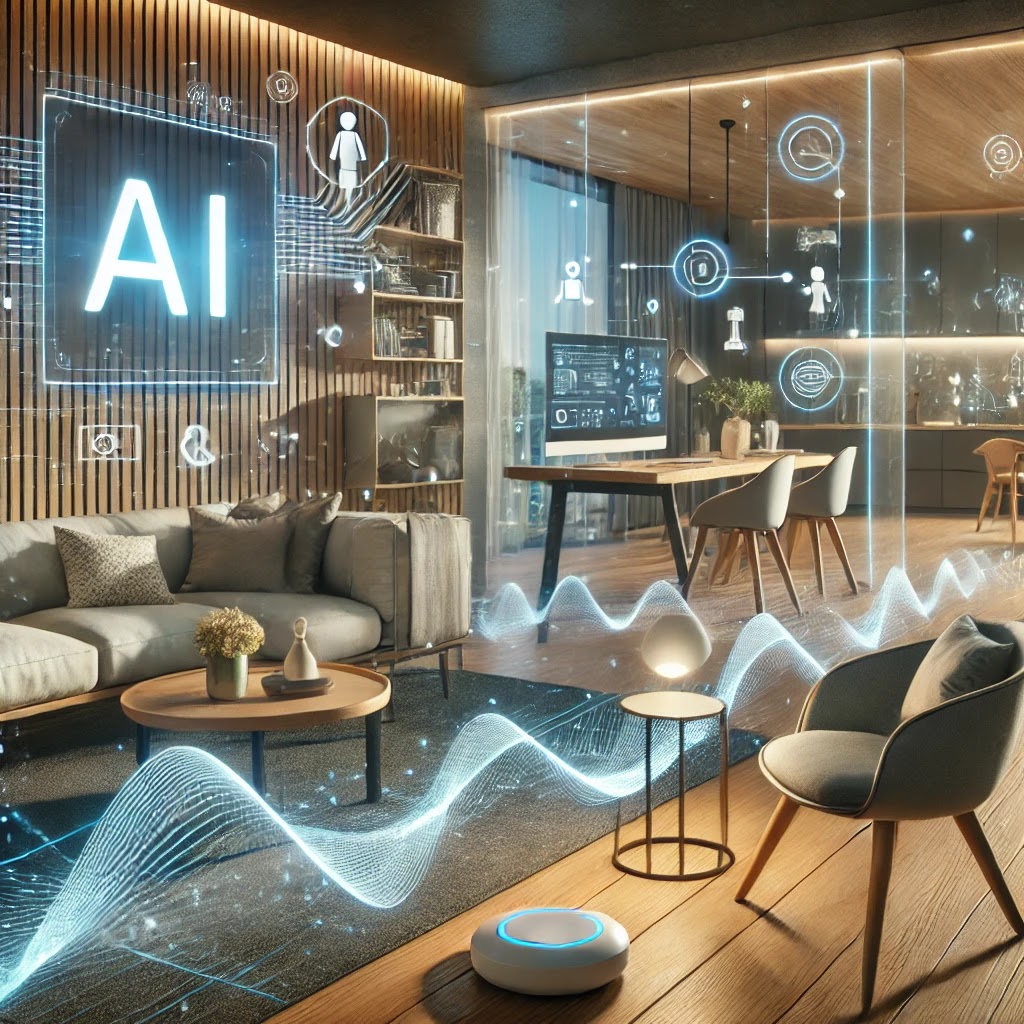
AI's Role in Transforming Homes into Living, Learning Spaces


In today’s evolving world, Artificial Intelligence (AI) is increasingly becoming a part of our daily lives, not just as an external tool, but as an intimate and integral part of our living spaces. At Skyiots Solutions, we are on a mission to redefine how AI integrates into our homes—creating an environment that is more than just connected but is also adaptive, proactive, and genuinely intelligent.

From Static Spaces to Living Entities

Imagine your home as a living entity—one that understands not only your actions but also the context behind them. AI takes a regular smart home and transforms it into something that evolves based on how you live. With every interaction, the AI learns your routines, preferences, and desires. It anticipates your needs before you even realize them, making your home a partner in day-to-day life.

Gone are the days when homes were simply spaces with light switches and curtains. Picture this: you come home after a busy day, and the AI in your house has already adjusted the lighting to a cozy warmth, set the thermostat to your favorite temperature, and your favorite jazz tunes are already softly playing in the background. This seamless experience is the vision of a truly intelligent home—one where AI knows you so well that every little detail is just right.

AI-Powered Emotional Connectivity

A key aspect of AI's involvement in smart homes is its ability to understand and respond to emotions. Imagine a home that doesn’t just listen to commands, but senses your mood. You come home feeling drained, and the AI dims the lights, warms the room, and starts playing your meditation playlist—because it recognizes what you need to unwind.

Skyiots Solutions is incorporating AI that learns more than just your daily routines; it learns you. The aim is to make homes more emotionally attuned—where every action is geared toward enhancing your well-being. Smart home technology shouldn’t just be about flashy automation; it should be about the warmth of a home that cares for you.

Proactive Adaptation for Every Member of the Family

The power of AI in your home means adapting proactively to each family member’s needs. Kids coming home from school? The AI knows it’s time to switch on their favorite cartoons or set up the study room lighting for homework. Have elderly parents at home? AI can be integrated with health sensors, automatically ensuring they’re comfortable and providing alerts if anything unusual happens.

The home becomes a place that dynamically adjusts itself to everyone, young or old, providing comfort and safety for all. It’s like living in a space that is not just aware of its environment, but also of the unique individuals sharing that space.

Human-Like Interactions with AI

Voice commands are just the beginning. At Skyiots, we believe that interaction with your home should be natural, not limited to commands like “Turn on the lights.” AI integrated into smart homes should be able to have real conversations. You could say, “I’m feeling a little chilly,” and the home responds by gently adjusting the temperature without the need for a direct order.

We’re taking AI beyond voice assistance—to understand conversational cues, interpret emotions, and truly comprehend what a person needs based on both verbal and non-verbal input. It’s about creating an intelligent space that understands the human experience.

Securing Your Family with AI

AI participation in smart homes also extends into security. Imagine an AI-powered system that recognizes the difference between a family member arriving late and a potential intruder. It doesn’t just alert you; it makes intelligent decisions to protect your home. The security extends beyond the front door—AI-powered cameras can recognize packages left outside, identify strangers, and ensure every corner of your home is protected with advanced, adaptive awareness.

Sustainable Smart Living

The future is about sustainability. With AI, your smart home doesn’t just manage devices—it manages resources responsibly. AI can understand your household's energy consumption patterns and suggest optimizations, ensuring you’re both comfortable and eco-friendly. Appliances run during optimal energy hours, lights automatically turn off when rooms are unoccupied, and energy usage is minimized without compromising on the comfort of your home.

The Skyiots Promise: A Home with Heart

Skyiots Solutions is committed to blending technology with a human touch. We’re not just building smart homes; we’re building homes that feel alive. Homes that learn, adapt, and grow with your family, responding to needs as they arise, and always making life easier, more comfortable, and more secure.

With AI transforming every element of the home—security, convenience, sustainability, and comfort—we invite you to experience a living space that doesn’t just contain you but also understands and evolves with you.